Tuning DSP Settings to Eliminate Echo on JBL Reflect Flow ANC Earbuds
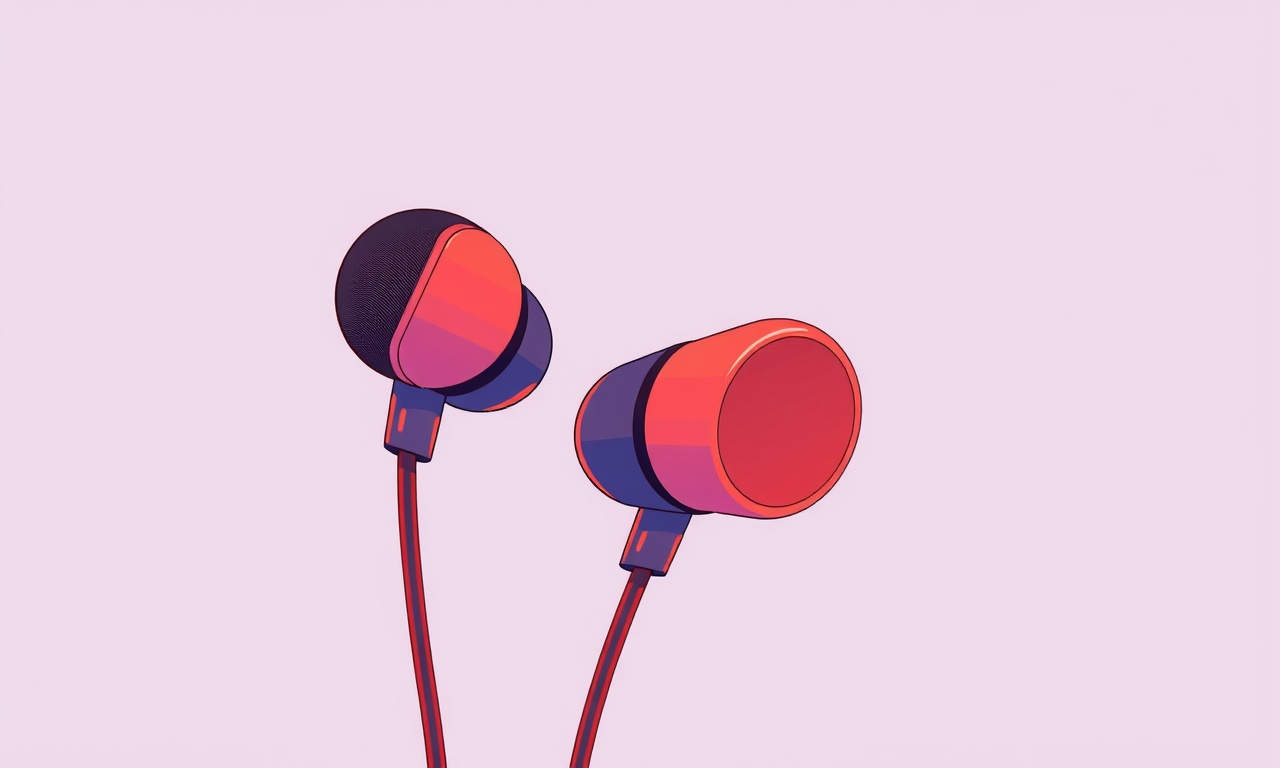
Introduction
The JBL Reflect Flow ANC earbuds are celebrated for their sleek design, secure fit, and active noise cancelling performance. Yet many users report a faint echo that surfaces when the ANC is engaged, especially during calls or when listening to high‑resolution tracks. This echo is not a defect in the hardware; it is a signal processing artifact that can be mitigated by adjusting the digital signal processing (DSP) parameters. This guide walks you through the entire process of locating the relevant settings, understanding what each control does, and fine‑tuning the earbuds until the echo disappears.
Understanding Echo in ANC Earbuds
Echo in the context of earbuds is a delayed replica of the original audio that reaches the listener’s ear canal a few milliseconds later. The delay is typically introduced by the adaptive algorithms that drive the ANC microphones and speakers. When the echo is audible, it creates a sense of space that feels unnatural and can be distracting during workouts, phone calls, or immersive music sessions.
Two main mechanisms generate echo in the Reflect Flow:
- Acoustic feedback – the speaker output leaks into the external microphone, and the ANC processor mistakenly treats this leakage as environmental noise.
- Cross‑talk – the left and right drivers share a common acoustic chamber. Sound from one driver can be picked up by the opposite side’s microphone, causing a low‑level mirror image.
Both mechanisms are controllable through the DSP firmware that resides in the earbuds. By lowering the gain of specific feedback loops, adjusting the phase alignment, and refining the equalisation, the echo can be reduced to inaudible levels.
What DSP Does for the Reflect Flow
The DSP in JBL’s Reflect Flow performs several tasks simultaneously:
- Active Noise Cancellation – generates anti‑phase sound to cancel external noise.
- Transparency Mode – blends ambient sound back into the playback stream.
- Equalisation – shapes frequency response to match the acoustic signature of the ear tip and driver.
- Feedback Suppression – detects and attenuates loops where speaker output re‑enters the microphone.
- Latency Management – synchronises audio between the two earbuds and the source device.
Each of these modules has a set of parameters that can be exposed through the companion app or a third‑party tuning interface. The key to eliminating echo lies in the feedback suppression and cross‑talk cancellation blocks.
Accessing the DSP Settings
JBL “Fit” App
JBL provides a free mobile app called JBL Fit (available for iOS and Android). After pairing the Reflect Flow, open the app and navigate to Device Settings → Advanced Audio. Here you will find sliders for:
- ANC level (Low, Medium, High)
- Transparency gain
- Custom EQ (10‑band)
- Feedback reduction (On/Off, Strength)
Third‑Party Tuning Tools
For deeper control, enthusiasts use tools such as AudioForge or OpenDSP which can communicate with the earbuds over Bluetooth Low Energy. These utilities expose the raw filter coefficients, phase offsets, and time‑delay settings. While powerful, they require a basic understanding of digital audio concepts.
Safety Precautions
Before making any changes:
- Backup the current configuration – both the JBL app and third‑party tools allow you to export a JSON file.
- Charge the earbuds to at least 80 % – firmware changes consume power and a low battery can cause the update to abort.
- Ensure a stable Bluetooth connection – any interruption may corrupt the DSP memory.
Common Sources of Echo
Identifying the root cause speeds up correction. Typical scenarios include:
- Loose ear tip – an imperfect seal allows speaker sound to escape and re‑enter the outer microphones.
- High volume playback – louder output increases acoustic leakage, pushing the feedback loop beyond the suppression threshold.
- Environmental acoustics – very reflective rooms create delayed reflections that the ANC mistakenly cancels, producing an echo‑like effect.
- Firmware bugs – older versions may have less aggressive feedback suppression algorithms.
By eliminating the physical contributors first, the DSP has less work to do, making the later tuning steps more effective.
Step‑by‑Step Tuning Process
Below is a systematic approach that works for most users. Follow each stage before moving to the next.
1. Reset and Update
Open the JBL Fit app, go to Device Settings → Reset, and select “Factory Reset”.
After the reset, check Settings → Firmware for any available update and install it. Firmware updates often contain refinements to the ANC algorithm that directly impact echo.
2. Baseline Measurement
Play a familiar track that contains a strong, clean vocal line (for example, a pop song with mid‑range clarity). Record the output using a calibrated external microphone placed at the ear canal opening. Use a free spectrum analyser app to view the waveform. Note any delayed peaks that repeat the main vocal after 20‑40 ms – those are the echo signatures you will aim to suppress.
3. Adjust ANC Level
In the JBL Fit app, lower the ANC intensity from “High” to “Medium”. Many users find that the “High” setting is overly aggressive, feeding more leakage into the microphones. If the echo diminishes, keep the setting at “Medium”. If not, proceed to the next step.
4. Tweak Feedback Reduction
Enable the Feedback Reduction toggle if it is not already active. Then, using the slider, increase the strength gradually in 10 % increments. After each adjustment:
- Play the test track for 30 seconds.
- Listen for any lingering echo.
- If the echo becomes less noticeable, continue; if the audio starts to feel “hollow” or overly damped, retreat a step.
5. Refine the Equalisation
Open the Custom EQ panel. Echo often becomes more apparent in the 2 kHz to 5 kHz band where human speech lives. Apply a modest cut (‑2 dB to ‑4 dB) in this range and observe the result. Be careful not to over‑cut, as this can make music sound dull. For users comfortable with precise frequency control, use a narrow‑band notch centered at the exact frequency where the echo peaks in the spectrogram.
6. Cross‑Talk Cancellation
If you have access to a third‑party tuning tool, locate the Cross‑Talk Matrix. This matrix contains coefficients that tell the DSP how much of the left driver’s output should be subtracted from the right microphone signal, and vice versa. Reduce the matrix values by 10 % increments while monitoring the test track. When the echo disappears on both channels, lock the values.
7. Delay Alignment
Some firmware versions allow you to adjust a Time Delay parameter for each earbud’s ANC path. A misaligned delay can cause the anti‑noise wave to arrive slightly later than the external noise, producing a subtle echo. Decrease the delay by 1 ms steps until the echo fades. Usually a delay of 0 ms to 2 ms works best for most listeners.
8. Verify with Calls
Echo is especially noticeable during voice calls because the microphone is actively picking up speech while the ANC runs concurrently. Use a VoIP app (such as Skype or Zoom) and call a friend. Speak naturally and ask them if they hear any echo of your voice. If echo persists, repeat steps 4‑7 with a focus on the Transmission path rather than the Playback path.
Fine‑Tuning Tips
- Fit the ear tips securely – a proper seal reduces acoustic leakage dramatically.
- Avoid extreme volume levels – 80 % of maximum is a good ceiling for most workouts.
- Use the “Transparency” mode sparingly – it re‑introduces ambient sound, which can confuse the feedback loop.
- Keep the earbuds clean – earwax or debris on the microphone ports can cause irregular acoustic reflections.
- Test in different environments – a quiet room, a busy street, and an indoor gym each present unique challenges for ANC.
Using Test Tracks and Tools
A reliable test track contains a clean impulse, such as a short snare hit, followed by a sustained vocal or instrument. The impulse reveals latency issues, while the sustained portion highlights echo. You can also generate a 1 kHz sine wave and watch the spectrogram for any secondary peaks.
For those who enjoy visual feedback, open a free tool like Audacity and enable the “Plot Spectrum” view. Load the recorded audio, zoom in on the 2 kHz‑5 kHz range, and look for a small bump that appears exactly 30 ms after the main peak. Adjust the DSP settings until that bump disappears.
Advanced Options
Custom FIR Filters
If you are comfortable with digital filter design, you can upload a custom finite impulse response (FIR) filter to the earbuds via the third‑party tool. FIR filters can precisely cancel specific frequencies that cause echo without affecting the rest of the audio spectrum. A typical filter length of 64 taps is sufficient for most echo‑removal tasks.
OTA Firmware Patching
Occasionally JBL releases a “beta” firmware that contains experimental ANC algorithms. Enrolling in the OTA (over‑the‑air) update program may give you early access to improvements. Be aware that beta firmware can be less stable; always keep a copy of the stable firmware configuration.
Troubleshooting Persistent Echo
If echo remains after all adjustments, consider these possibilities:
- Hardware damage – a cracked driver or microphone can cause irregular leakage. Inspect the earbuds for visible cracks.
- Interference from other Bluetooth devices – nearby transmitters can distort the acoustic signal path. Turn off other wireless accessories temporarily.
- Phone software bug – some Android skins alter the audio routing chain. Test the earbuds with a different device to isolate the issue.
If none of these steps help, contact JBL support with a full log of your DSP settings, firmware version, and a short audio recording that demonstrates the echo. Their engineering team can often provide a custom firmware patch.
Preventive Maintenance
- Store the earbuds in their case when not in use – this protects the microphones from dust.
- Run a weekly “seal check” – press gently on the ear tip to ensure it still conforms to the shape of your ear canal.
- Keep the companion app up to date – UI improvements frequently add new DSP controls that can aid future tuning.
Conclusion
Echo in the JBL Reflect Flow ANC earbuds is not an immutable flaw; it is a treatable artifact that can be eliminated through systematic DSP tuning. By updating firmware, adjusting feedback suppression, refining EQ, and, if needed, tweaking cross‑talk and delay parameters, most users can achieve a clean, echo‑free listening experience. The key is to start with a solid physical fit, measure the problem accurately, and make incremental changes while listening critically. With the steps outlined in this guide, you can enjoy the full potential of JBL’s active noise cancelling technology without the distraction of a lingering echo.
Discussion (8)
Join the Discussion
Your comment has been submitted for moderation.
Random Posts
Reassessing the Audio Jack Dropout on LG Velvet 2
Explore why the LG Velvet 2's 3.5mm jack glitches, what triggers audio dropouts, user fixes, and LG's stance: essential insight for current and future Android phones.
1 year ago
Philips HP700 Fan Stalls Quietly Even At Low Speed Why This Happens And What To Do
Discover why your Philips HP700 quietly stalls at low speed, spot early signs, and fix the issue to keep steady airflow.
2 weeks ago

How to Stop Sharp LC-40M from Producing Audio Sync Issues While Gaming
Fix your Sharp LC-40M so game audio stays in sync. Learn quick settings tweaks, cable checks, and audio-output fixes that keep sound matching action for a flawless gaming experience.
6 months ago

Solve Arlo Pro 4 Wireless Connection Problems
Discover quick fixes for offline Arlo Pro 4 cameras. Check power, Wi, Fi, firmware, reset steps, and more get your live feed back up fast.
4 months ago
Panasonic D45 Dryer Timer Skips Final Drying Cycle
Discover why your Panasonic D45 dryer skips its final cycle, learn the symptoms, root causes, and easy fixes to keep clothes dry, save energy, and avoid extra runs.
5 months ago
Latest Posts

Fixing the Eufy RoboVac 15C Battery Drain Post Firmware Update
Fix the Eufy RoboVac 15C battery drain after firmware update with our quick guide: understand the changes, identify the cause, and follow step by step fixes to restore full runtime.
5 days ago

Solve Reolink Argus 3 Battery Drain When Using PIR Motion Sensor
Learn why the Argus 3 battery drains fast with the PIR sensor on and follow simple steps to fix it, extend runtime, and keep your camera ready without sacrificing motion detection.
5 days ago
Resolving Sound Distortion on Beats Studio3 Wireless Headphones
Learn how to pinpoint and fix common distortion in Beats Studio3 headphones from source issues to Bluetooth glitches so you can enjoy clear audio again.
6 days ago